- Who Is Caliber Mining and Logistics Limited?
- Fleet and Operational Scale
- Geographic Footprint and Expansion Plans
- Diversifying Into Iron Ore Logistics
- Caliber Mining IPO: What’s Confirmed So Far
- An Approval Window Worth Watching
- Promoter Holding
- What the IPO Proceeds Are Meant to Fund
- Why Contract Mining Is a Different Kind of Business to Evaluate
- Revenue Comes From Long-Term Contracts and Tenders
- Fuel and Equipment Costs Are a Constant Pressure
- Regulatory and Environmental Exposure
- Strengths Worth Noting
- Risks and Concerns to Keep in Mind
- How to Apply Once the IPO Opens
- Frequently Asked Questions
- Final Thoughts: Worth Keeping on Your Radar?
Coal doesn’t get much attention in the IPO headlines these days, but the businesses that keep it moving out of the ground still need capital to grow — and Caliber Mining and Logistics is one of those quieter, unglamorous companies now working its way toward a stock market listing. If you’ve searched for it recently, you’ve probably noticed the same thing every IPO tracker shows right now: a ₹600 crore issue size, and blank fields everywhere else.
That’s not a mistake on anyone’s part. This IPO has been sitting in a holding pattern for a while, with SEBI approval already secured but the actual price band, lot size, and opening dates still pending. Given how long this one’s been in the pipeline, it’s worth understanding the business properly now, rather than scrambling to catch up once the RHP finally drops.
Here’s a full breakdown of what Caliber Mining does, what’s confirmed about the IPO so far, and what to watch for as it moves toward launch.
Who Is Caliber Mining and Logistics Limited?
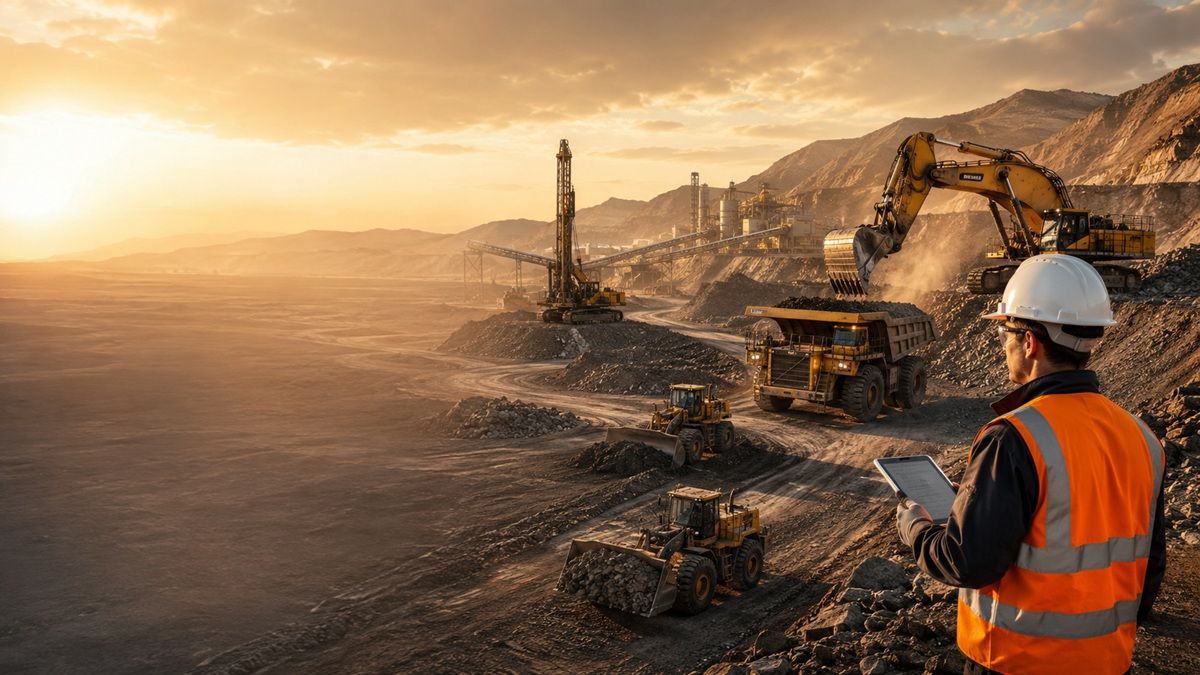
Caliber Mining and Logistics was incorporated in 2014 and has built itself into one of India’s more prominent names in contract mining — the company describes itself as ranking among the top 10 contract mining operators in the country. Rather than owning coal reserves outright, it operates as an integrated service provider, handling the physical work that mining companies and coal-consuming industries need done: overburden removal, coal extraction, and coal logistics.
In plainer terms, when a mining lease holder needs the dirt and rock cleared off a coal seam, the coal actually dug out, and then transported to where it needs to go, companies like Caliber Mining are the ones doing that heavy lifting under contract.
Fleet and Operational Scale
As of October 31, 2024, the company operated a fleet of 1,473 vehicles — 1,373 owned and 100 leased. That fleet includes 600 mining tippers, 447 tip trailers, and 96 excavators, giving a fairly clear sense of the sheer physical scale required to run a contract mining and logistics operation at this level.
Owning the bulk of that fleet outright, rather than leasing most of it, is a detail worth noting. It suggests the company has built real capital-intensive infrastructure over the years rather than running a purely asset-light brokerage model, which tends to matter a lot in a business where uptime and reliability directly determine whether contracts get renewed.
Geographic Footprint and Expansion Plans
Caliber Mining currently operates across Maharashtra, Madhya Pradesh, and Chhattisgarh — three states with a significant concentration of India’s coal mining activity. The company has laid out plans to extend its footprint further into Odisha and Jharkhand, both of which are major coal-producing states as well, by participating in tenders and leaning on regional demand for mining services.
That kind of expansion strategy is fairly typical for contract mining businesses — growth tends to come from winning new tenders in adjacent mining belts rather than through acquisitions or entirely new business lines, and it puts a lot of weight on the company’s tendering track record and execution reputation.
Diversifying Into Iron Ore Logistics
One detail that sets Caliber Mining apart from a pure coal-focused peer is its move into iron ore transport, which began in Fiscal 2023 and reportedly saw significant growth by Fiscal 2024. The company has framed this as a natural extension of its existing logistics expertise — leveraging its large vehicle fleet, established maintenance capabilities, and access to lower-cost diesel to serve a different mineral transport segment rather than building an entirely new operational base from scratch.
This kind of diversification matters more than it might seem at first glance. A contract mining company that’s entirely dependent on coal-sector tenders carries real concentration risk tied to coal demand cycles and government energy policy. Having a second mineral logistics vertical, even an early-stage one, gives the business a bit more room to absorb a slowdown in any single segment.
Caliber Mining IPO: What’s Confirmed So Far
| Detail | Status |
|---|---|
| IPO Type | Mainboard, Book Build Issue |
| Total Issue Size | ₹600 crore |
| Fresh Issue | Approximately ₹500 crore |
| Offer for Sale (OFS) | Approximately ₹100 crore |
| Face Value | ₹10 per share |
| SEBI Approval | Granted May 13, 2025 |
| Price Band | Not yet announced |
| Lot Size | Not yet announced |
| Opening / Closing Dates | Not yet announced |
| Listing Exchanges | BSE, NSE |
| Registrar | KFin Technologies Ltd. |
| Lead Manager | DAM Capital Advisors Ltd. (formerly IDFC Securities Ltd.) |
A discrepancy worth flagging: Most trackers, including two independent platforms, consistently report the fresh issue portion at ₹500 crore with the OFS at ₹100 crore, adding up to the total ₹600 crore issue size. One other source, however, cites the fresh issue figure at ₹440 crore instead. Since the exact split hasn’t been locked into a public price band yet, treat the ₹500 crore / ₹100 crore breakdown as the more widely reported figure, but confirm the final numbers against the official RHP once it’s released rather than relying on any single secondary source.
An Approval Window Worth Watching
SEBI approved Caliber Mining’s IPO back on May 13, 2025, and that kind of regulatory observation is typically valid for a fixed window — commonly around 12 months — before a company needs to either launch the issue or seek a fresh nod. Given how much time has passed since that original approval, it’s worth checking the current status directly through SEBI’s public filings or the company’s own updates before assuming the original clearance is still active without any renewal. IPO tracking platforms were still actively listing this as an upcoming issue as of early July 2026, which suggests the process remains alive in some form, but the exact regulatory standing is a detail worth confirming rather than assuming.
Promoter Holding
Pre-issue, the company’s shareholding stands at 5,35,83,333 shares, with the promoter group — Mohit Satishkumar Chadda, Anuj Krishanlal Chadda, Manish Krishanlal Chadda, Rahul Roshanlal Chadda, and Priya Anuj Chadda — collectively holding 92.66% of the company. That’s a heavily promoter-concentrated ownership structure, which is fairly typical for a family-run mining services business of this scale ahead of a public listing.
What the IPO Proceeds Are Meant to Fund
Based on the objects stated in the draft filings, the net proceeds from the fresh issue portion are broadly earmarked for:
- Repayment or prepayment, in full or part, of certain existing borrowings
- Funding capital expenditure toward the purchase of additional machinery
- General corporate purposes
For a fleet-heavy, capital-intensive business like contract mining, this is a fairly sensible allocation — reducing debt lightens the interest burden, while fresh machinery purchases support the company’s stated ambitions to expand into new states and win additional tenders. The filings also mention the possibility of a pre-IPO placement, which, if undertaken, cannot exceed 20% of the fresh issue size and would proportionally reduce the fresh issue amount raised through the public offer.
Why Contract Mining Is a Different Kind of Business to Evaluate
If you’re used to evaluating tech or consumer IPOs, contract mining and logistics businesses run on a fairly different set of dynamics, and it’s worth understanding a few of them before forming a view on this company.
Revenue Comes From Long-Term Contracts and Tenders
Unlike a business selling directly to consumers, Caliber Mining’s revenue depends heavily on winning and executing multi-year contracts with mining lease holders and coal or iron ore off-takers. That means revenue visibility can actually be quite strong once contracts are in hand, but growth is lumpy — new revenue typically arrives in large chunks tied to specific tender wins rather than steady incremental increases.
Fuel and Equipment Costs Are a Constant Pressure
Diesel prices directly affect the cost of running a fleet this large, and equipment maintenance is a continuous, non-negotiable expense in this line of work. The company’s stated access to lower-cost diesel is presented as a competitive advantage, but fuel price volatility remains a structural risk across the entire contract mining sector, not something unique to any one operator.
Regulatory and Environmental Exposure
Coal mining in India operates under a fairly complex regulatory environment, covering everything from environmental clearances to state-level mining policy to periodic shifts in how coal blocks get allocated and auctioned. A services provider like Caliber Mining doesn’t hold the mining leases itself, but its business is still directly exposed to how actively lease holders are permitted to operate, and how quickly new projects clear regulatory hurdles.
Strengths Worth Noting
- Established scale. A fleet of nearly 1,500 vehicles, mostly owned outright, represents genuine operational infrastructure built over more than a decade.
- Top-10 industry positioning. Ranking among India’s leading contract mining operators gives the company a credible track record for winning and executing large tenders.
- Diversification into iron ore. The move beyond pure coal logistics into iron ore transport reduces single-commodity dependence, even if that segment is still relatively early-stage.
- Geographic expansion pipeline. Plans to extend into Odisha and Jharkhand tap into two more coal-rich states, giving the business a clear organic growth runway beyond its current three-state footprint.
- Debt reduction focus. A meaningful chunk of the fresh issue proceeds is earmarked for repaying existing borrowings, which should help lighten the company’s interest cost burden going forward.
Risks and Concerns to Keep in Mind
- Pricing details are still pending. With no confirmed price band, there’s no way yet to assess whether the eventual valuation is reasonable relative to the company’s earnings.
- Coal sector dependency. Despite the move into iron ore, the bulk of the company’s operations remain tied to coal extraction and logistics, exposing it to coal demand cycles and energy policy shifts.
- Fuel price sensitivity. Diesel costs form a significant, ongoing operating expense for a fleet this size, and sustained fuel price increases could pressure margins.
- Tender-based revenue concentration. Heavy reliance on winning large contracts means the loss of even one or two major tenders could materially affect near-term revenue.
- Regulatory and environmental exposure. Mining sector approvals, environmental clearances, and state-level policy shifts can all affect the pace at which the company’s clients — and by extension, Caliber Mining itself — can operate and expand.
- Heavily concentrated promoter holding. At 92.66% pre-issue, governance and minority shareholder considerations are worth a closer look once the company’s board composition and related-party disclosures become public in the RHP.
- Approval timeline uncertainty. The original SEBI approval dates back to May 2025, and it’s worth independently confirming its current status rather than assuming the process is proceeding on the originally granted clearance without any update.
How to Apply Once the IPO Opens
Once the price band and dates are officially announced, the application process will follow the standard mainboard route through most major brokers:
- Log into your broker’s platform (Zerodha, Bajaj Broking, and most others support this route) or your bank’s net banking portal.
- Navigate to the IPO section and locate the Caliber Mining and Logistics listing.
- Choose ASBA through net banking, or the UPI mandate route through your broker.
- Enter your bid quantity and price within the announced band.
- Submit the application and approve the UPI mandate through your banking app before the cut-off time.
As with any book-built IPO, funds get blocked in your account rather than debited immediately, and released automatically if you aren’t allotted shares.
Frequently Asked Questions
When will the Caliber Mining IPO open?
The exact opening and closing dates haven’t been announced yet. SEBI approved the issue back in May 2025, but the price band and dates remain pending as of this writing.
What is the total size of the Caliber Mining IPO?
The total issue size is ₹600 crore, most commonly reported as a fresh issue of ₹500 crore combined with an Offer for Sale of ₹100 crore, though one source cites a slightly different fresh issue figure.
What does Caliber Mining and Logistics actually do?
It’s a contract mining and logistics company handling overburden removal, coal extraction, and coal transport for mining lease holders, with a more recent expansion into iron ore logistics.
What is the current GMP for Caliber Mining IPO?
There’s no active grey market premium since the price band hasn’t been declared yet. GMP only becomes meaningful once a company’s price band is officially announced.
Who holds the majority stake in the company?
The promoter group — Mohit Satishkumar Chadda, Anuj Krishanlal Chadda, Manish Krishanlal Chadda, Rahul Roshanlal Chadda, and Priya Anuj Chadda — collectively holds 92.66% of the company pre-issue.
What will the IPO proceeds be used for?
Primarily to repay or prepay existing borrowings, fund the purchase of additional machinery, and cover general corporate purposes.
Who is the registrar and lead manager for this IPO?
KFin Technologies Ltd. is the registrar, and DAM Capital Advisors Ltd. (formerly IDFC Securities Ltd.) is the book-running lead manager.
Final Thoughts: Worth Keeping on Your Radar?
Caliber Mining and Logistics isn’t a company you can fully evaluate yet, simply because the numbers that actually determine whether an IPO is attractively priced — the price band, the earnings multiple, the exact financials — aren’t public. What is visible paints the picture of a genuinely established operator: a large owned fleet, a top-10 industry position, a sensible diversification move into iron ore, and clear expansion plans into new coal-producing states.
At the same time, this is fundamentally a commodity-services business tied closely to coal sector cycles, fuel costs, and tender wins — not a sector known for smooth, predictable growth. Combine that with a regulatory approval that’s been sitting for well over a year and a fresh-issue-versus-OFS split that different sources describe slightly differently, and the sensible approach here is patience rather than premature conviction.
Keep this one on your watchlist, but hold off on forming a firm view until the official RHP lands with a locked price band and audited financials. That’s the point at which you’ll actually be able to judge whether Caliber Mining’s fundamentals justify the valuation the market ends up putting on it.
Disclaimer: This article is for informational purposes only and does not constitute investment advice. Details mentioned here reflect publicly available information at the time of writing and are subject to change once the company officially announces its price band and IPO dates. Please consult a SEBI-registered investment advisor and read the official RHP before applying.